
The Conversation About Stairlifts: How to Talk to Your Loved One About Safety at Home
- Paul Bastante

- Oct 20
- 4 min read
The Conversation About Stairlifts: How to Talk to Your Loved One About Safety at Home
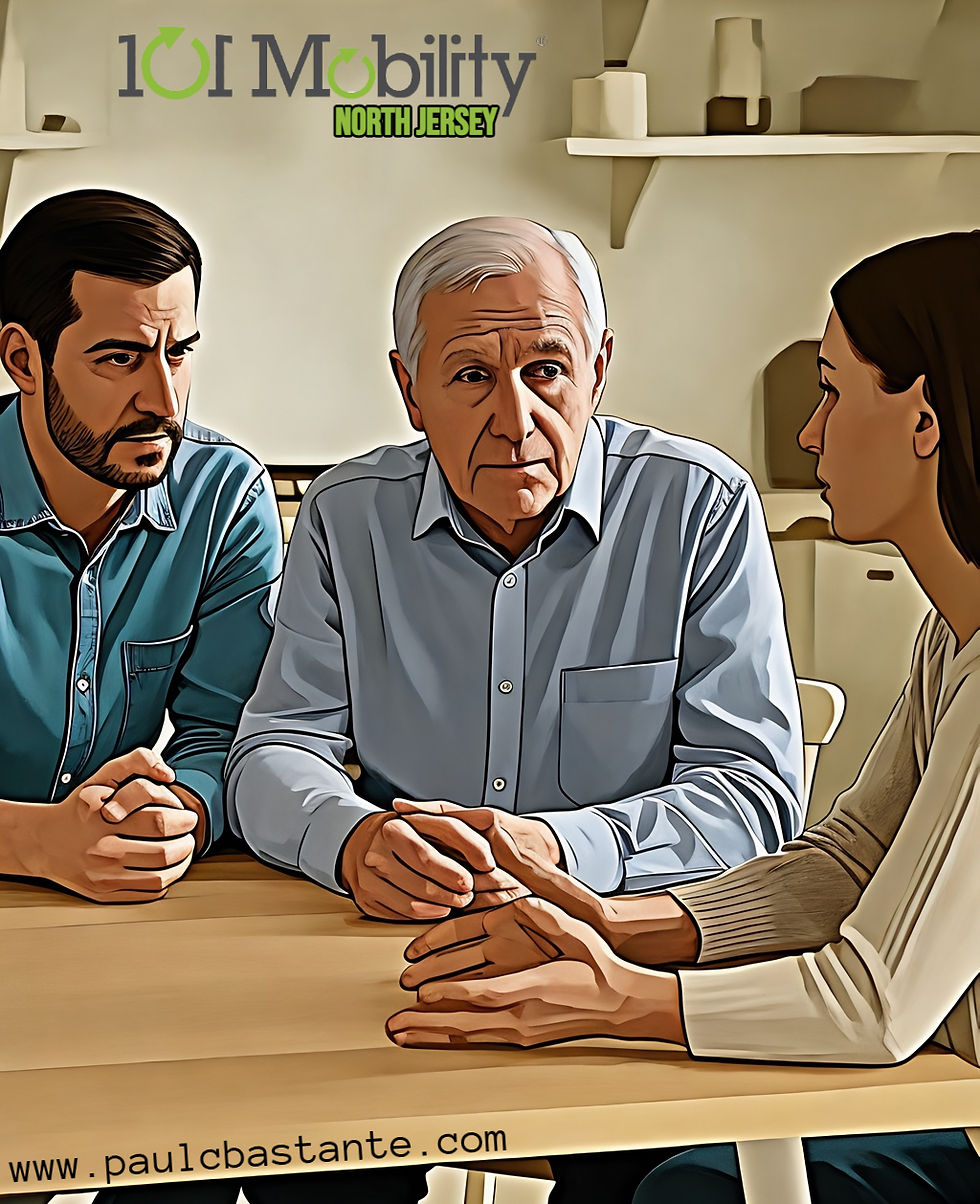
For many families, talking to an aging parent or loved one about installing a stairlift can feel uncomfortable — even emotional. It’s not just about stairs; it’s about independence, pride, and change. But avoiding the conversation can mean taking unnecessary risks. Each year, thousands of seniors are hospitalized due to falls on stairs — often after family members have already noticed warning signs.
If you’re a caregiver or family member, learning how to approach this topic with compassion, empathy, and clear information can make all the difference. At 101 Mobility North Jersey, we’ve helped countless families navigate this transition, and we know it starts with one simple but powerful step: the conversation.
Why Stairlifts Are About Independence — Not Limitation
The first misconception to address is that stairlifts represent a loss of independence. In reality, they’re the opposite. A stairlift gives your loved one the ability to safely access all levels of their home — on their own terms.
As we age or recover from injury, stairs become one of the most dangerous areas in the house. What once was a simple climb can turn into a major hazard. Installing a stairlift doesn’t mean your loved one is giving up — it means they’re choosing to stay in the home they love while maintaining dignity and control over their daily life.
Think of a stairlift like any other home safety tool — grab bars, handrails, or shower chairs. These aren’t signs of weakness; they’re signs of wisdom and proactive care.
Recognizing the Signs That It’s Time to Talk
It’s not always easy to know when it’s time to bring up stairlifts. Here are some subtle signs that your loved one may be struggling with the stairs more than they admit:
They avoid going upstairs or limit how often they do.
You notice hesitation or visible fear when approaching the stairs.
They rely on furniture or railings for balance.
They’ve had a recent fall, stumble, or close call.
You or another caregiver are providing more physical help than before.
These behaviors often signal that stairs have become a barrier — physically and emotionally. Starting the conversation before an accident happens is the best way to keep everyone safe and supported.
How to Start the Conversation — The Right Way
Choose the Right Time and Setting. Bring it up during a calm, relaxed moment — not during a crisis or immediately after a fall. You want your loved one to feel respected and heard, not pressured.
Lead with Empathy. Begin by expressing concern, not control. For example: “Mom, I’ve noticed you seem tired after climbing the stairs lately. I worry about your safety, and I’d love to explore some options that could make things easier.”
Focus on the Benefits. Emphasize how a stairlift supports independence and comfort. Talk about staying in the home they love, having full access to every room, and reducing reliance on others.
Include Them in the Process. Let your loved one be part of every decision — from choosing the color to understanding how it works. 101 Mobility offers free in-home consultations where we answer questions and provide demonstrations.
Reassure Them It’s Not Permanent or Complicated. Many people assume stairlifts are major renovations. In reality, most straight stairlifts install in just a few hours with no structural changes. If your loved one ever moves, it can be easily removed or relocated.
The Emotional Side — Overcoming Resistance
Sometimes, fear of aging, pride, or misconceptions about cost can make your loved one resist. That’s normal. Try reframing the conversation around freedom instead of frailty.
You might say, “A stairlift isn’t about giving up — it’s about getting your freedom back. You’ll be able to move around your home anytime you want, without needing help.”
If cost is a concern, explain that 101 Mobility offers rental options, financing, and pre-owned units to make stairlifts accessible for nearly every budget. The investment is small compared to the cost — financially and emotionally — of a hospital stay after a fall.
Why Families Trust 101 Mobility North Jersey
As a locally owned and operated business, 101 Mobility North Jersey understands that these decisions are deeply personal. We don’t believe in one-size-fits-all solutions. Our team takes the time to learn about your loved one’s unique needs, the layout of your home, and your family’s priorities.
We provide professional installation, service, and ongoing support — so once the stairlift is in place, you’ll have total peace of mind knowing your loved one is safe, comfortable, and cared for.
Final Thoughts
Having “the stairlift conversation” may feel daunting, but it’s really an act of love — one that prioritizes safety, independence, and dignity. When you approach it with empathy and understanding, your loved one will see it for what it truly is: a way to stay at home, on their own terms, for years to come.
Ready to start the conversation?
Call 101 Mobility North Jersey today at 973-447-3975 to schedule a free in-home consultation.
Local, compassionate, and focused on patient outcomes — we’ll help your family take the next step safely.
#Stairlift #Ramp #Aginginplace #HomeAccessability #SeniorIndependence #101MobilityNorthJersey #StairliftInstallation #RampInstallation #Grabbars #HomeSafety
Thank you for visiting The Accessibility Blog!
You can also visit some of our partners below:





Comments